

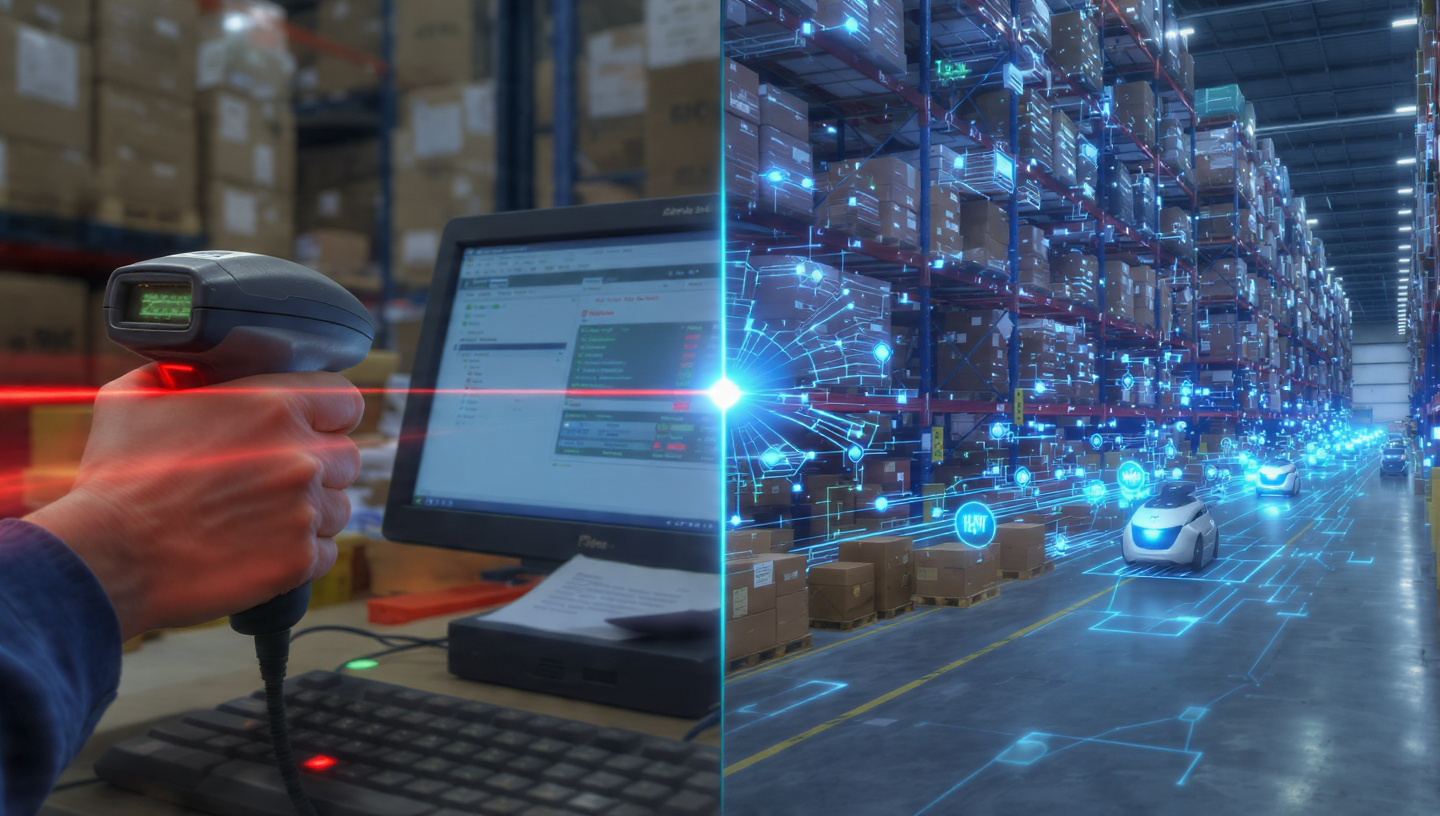

Smart Inventory & Procurement: Reducing Waste with IoT in F&B and Housekeeping
Most inventory waste doesn’t happen because teams are careless.
It happens because inventory systems are blind between counts.
In food & beverage and housekeeping, the gap between “what the system thinks we have” and “what we actually have” grows every hour: prep changes, spoilage, shrink, last-minute events, occupancy swings, staff handovers, and a hundred tiny consumption moments that never get recorded.
The result is predictable:
- Over-ordering to stay safe
- Stockouts that trigger expensive emergency purchases
- Write-offs that quietly become “normal”
If your inventory accuracy depends on humans remembering to update a sheet, you don’t have an inventory system. You have a recurring surprise.
IoT doesn’t magically fix operations. But it does one powerful thing: It makes consumption measurable.
And once consumption is measurable, procurement stops being a routine and becomes a loop:
Detect → validate → replenish.
A quick TL;DR (for the GM / Ops Leader)
If you’re not here for architecture, here’s the operational truth:
- Waste is caused by blindness, not laziness
- Sensors reduce waste by creating real-time visibility
- Visibility enables more accurate ordering
- Accurate ordering reduces both spoilage and panic buying
You don’t need “smart everything.” You need smart visibility in a few high-impact places.
Waste isn’t just expired items. It’s a system behavior.
When people say “waste,” they picture a bin of spoiled produce. But the real cost is broader and more painful:
- Over-ordering (“just in case” becomes policy)
- Emergency purchases (premium pricing + unpredictable supply)
- Phantom stock (the system says you have it; the shelf says you don’t)
- Shrink (loss you only notice after the fact)
- Labor burn (manual counts, reconciliations, chasing mismatches)
- Storage pressure (overstock creates chaos; chaos creates more loss)
Waste is often a forecasting problem wearing the mask of an inventory problem.
And forecasting is hard when your data is stale.
IoT doesn’t “automate inventory.” It gives inventory a pulse.
Traditional inventory runs on periodic truth:
Count → reconcile → adjust → order → repeat
That’s not management. It’s damage control.
IoT flips the model. It turns inventory into telemetry—something you observe continuously, like uptime or error rates in software.
You can’t optimize what you can’t see.
Where sensors deliver real ROI (and where they don’t)
This is not about putting sensors everywhere. That’s how pilots die.
The ROI shows up when you instrument the places where:
- the cost of mistakes is high, and
- the data is currently weakest.
F&B: High-impact, high-waste zones
1) Cold-Chain Monitoring: catching the “silent failures”
Temperature + door sensors turn spoilage from a surprise into an alert.
Because the worst incidents aren’t dramatic. They’re quiet:
- a freezer door not fully sealed
- a compressor degrading slowly
- a store room drifting out of range overnight
2) Smart Scales: making high-value depletion visible
Meat, seafood, cheese, premium produce—this is where over-ordering and shrink hurt most.
Scales help answer:
- How fast is it actually being consumed?
- Was that drop normal, or suspicious?
- Is the par level still realistic for this outlet?
3) Flow/Usage Telemetry: tracking what’s hard to count
Liquids (beverages, syrups, chemicals) are notorious for mismatch.
Usage telemetry helps reduce:
- leaks and wastage
- “we ran out but the system said we had six” moments
- refill schedules driven by guesswork
4) Waste Tracking: turning “trash” into insight
The moment you can see what is thrown and when, waste becomes diagnosable:
- Is overproduction happening on certain shifts?
- Is spoilage linked to storage events?
- Is a specific SKU consistently over-ordered?
Housekeeping: less glamorous, but quietly expensive
1) Linen & Uniform Tracking (RFID/QR): stopping “death by a thousand cuts”
Linen loss isn’t one big incident. It’s constant drift.
Tracking movement across:
Laundry → floor → room → return
This reduces shrink and stabilizes ordering.
2) Dispenser Telemetry: refilling based on need, not habit
Time-based refills are blunt.
Sensors enable refills based on usage, preventing both:
- over-servicing (wasted labor + wasted consumables)
- under-servicing (guest impact)
3) Closet/Pantry Min-Max: fixing the micro-warehouse problem
Housekeeping closets behave like decentralized stores.
Min/max signals prevent:
- one floor being overstocked
- another floor running out
- last-minute runs that waste time and disrupt service
The automation loop: from sensor signal to purchase order
“Automated procurement” sounds scary until you see how it’s supposed to work.
A mature loop is simple, auditable, and full of guardrails:
- Sense: A scale detects a drop. A dispenser hits a low level. A freezer logs an excursion.
- Clean + buffer at the edge (before it hits the cloud): This means: filtering noise, handling spotty connectivity, preventing gaps.
- Validate + enrich: Is this reading plausible? Does it match patterns? Is the device drifting? Which outlet/location is this tied to?
- Update “available-to-use” inventory: Not just “on hand.” Real operations need reserved vs available, in-use vs storage, suspect stock after incidents.
- Apply replenishment policy: Order logic usually includes par levels, lead time, pack size + MOQ, shelf-life constraints, upcoming events/occupancy signals.
- Recommend or auto-create PO: Early phase: recommendations. Later phase: automation for low-risk items, approvals for exceptions.
- Send PO + track fulfillment: Supplier integrations vary (API/EDI/email reality is real).
- Receive + reconcile: Receiving closes the loop and improves accuracy over time.
For the IT Team: building this without creating a fragile mess
Note: This section gets technical. If you’re ops-focused, feel free to skim.
A robust system treats inventory changes as events, not nightly batch updates.
A practical reference architecture (layered):
- Sensors & devices (scales, probes, RFID, dispensers)
- Edge gateway (buffering + basic validation)
- Event ingestion (MQTT/HTTP into streaming)
- Event backbone (Kafka/PubSub/EventHub-style)
- Inventory service (available-to-use + reservations + adjustments)
- Rules/replenishment engine (par, lead time, MOQ, shelf-life)
- Procurement service (POs, approvals, supplier comms)
- Analytics (forecasting, anomaly detection, supplier performance)
- Integrations (ERP/POS/PMS/WMS)
- Audit + observability (every action explainable)
The non-negotiables (translated to real outcomes):
- Resilience (Idempotency): Sensor events duplicate. Networks drop. Your system must handle repeats without ordering double stock.
- Offline-first design: Operations don’t stop because Wi‑Fi is flaky. Edge buffering isn’t a “nice to have.”
- Device identity + security: Every device is a potential attack surface. Bad signals can become bad orders.
- Human override flows: Operators need an easy way to pause automation, quarantine stock after incidents, and override recommendations with a reason.
The goal isn’t removing humans. It’s removing human beings from doing what systems should do.
The rules that make it work (and the ones that quietly break it)
Tech doesn’t fail most pilots. Policy does.
Rules that matter in real operations:
- Par levels by location (bar vs galley vs floor pantry are different consumers)
- Lead time + variability aware reorder points
- Pack-size + MOQ constraints (order like humans: cases, not units)
- Shelf-life + FEFO (use first-expire-first-out)
- Incident-driven quarantine rules (temp excursions trigger inspection workflows)
- Alert vs action thresholds (not every low signal should generate a PO)
What to measure (so this isn’t a “cool dashboard project”)
If you want credibility with finance and ops, track what both care about:
- Waste rate by category
- Write-offs as % of spend
- Stockout frequency
- Emergency purchases per week/month
- Inventory accuracy (system vs physical)
- Order cycle time (need → PO → delivery)
- Supplier fill + mismatch rate
- Cold-chain excursion count and spoilage correlation
Pitfalls teams underestimate
A few reality checks that build trust fast:
- Sensors can lie (drift, miscalibration, physical movement)
- Integrations are messy (ERP workflows and supplier readiness vary)
- People/process mismatch kills adoption (if it doesn’t match workflow, it gets ignored)
- Network/security constraints show up late (unless you plan early)
A rollout plan that actually survives contact with reality
Don’t start with “instrument everything.”
Start with one thin slice that has measurable outcomes:
- Phase 1: Visibility: Cold-chain monitoring + alerts + top SKUs telemetry
- Phase 2: Recommendations: Suggested reorder lists based on sensor-informed on-hand
- Phase 3: Guardrailed automation: Auto-PO for low-risk items; approvals for exceptions
- Phase 4: Optimization: Dynamic par levels + forecasting + supplier feedback loops
Start small, architect for scale.
Closing thought: Waste is a design problem.
When waste becomes “normal,” teams stop seeing it as solvable. They see it as the cost of doing business.
IoT doesn’t magically fix human discipline. But it changes the equation by making inventory observable—and therefore improvable.
The real win isn’t just a tech upgrade; it’s a culture shift. You move from panic ordering and monthly write-offs to a procurement process that behaves like a modern, predictable system.
Sustainability improves because the system is smarter.
Profit improves because the system is no longer blind.