

Simulation-First Deployment: Using Digital Twins to Validate AI Agent Performance Before They Hit Production
Introduction
As AI agents increasingly make autonomous decisions—routing customer requests, optimizing supply chains, or controlling industrial systems—the cost of failure in production grows dramatically. A single flawed decision can mean financial loss, downtime, or even safety risks.
What if you could test an AI agent in a realistic mirror of your production environment before releasing it to the real world?
This is where Simulation-First Deployment powered by Digital Twins becomes a game-changer.
What Is Simulation-First Deployment?
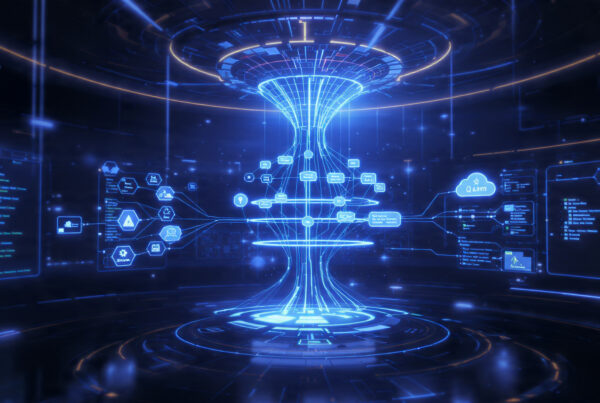
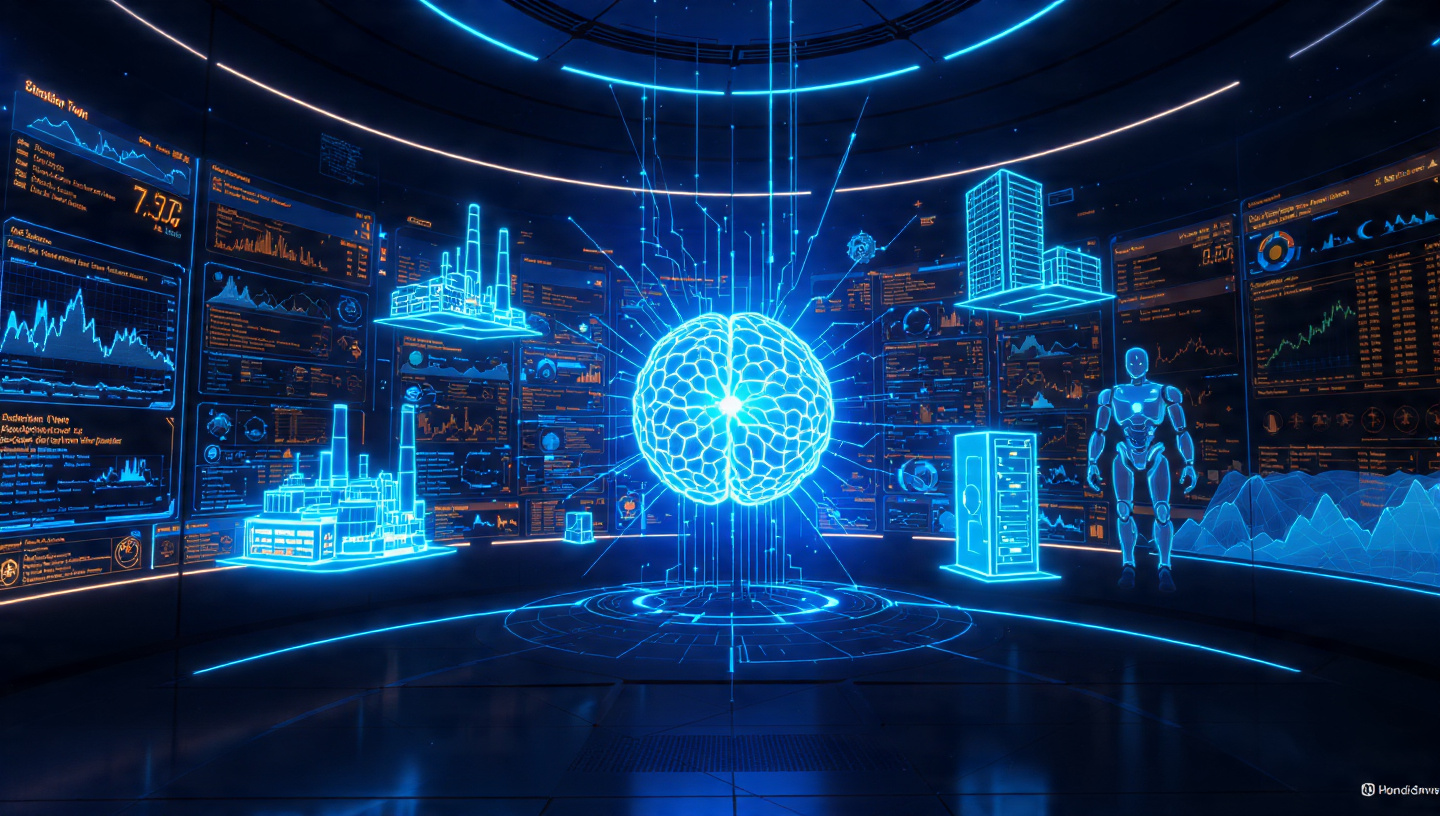
Simulation-First Deployment is a development strategy where AI agents are first validated in a simulated environment that accurately mirrors real-world systems. Instead of deploying directly to production, agents operate inside a digital twin—a virtual replica of processes, data flows, and constraints.
Only after proving reliability, stability, and performance in simulation are they promoted to live environments. Think of it as a flight simulator for AI agents.
Understanding Digital Twins
A Digital Twin is a dynamic virtual model of a real system. It continuously syncs with real data and mimics system behavior, enabling safe experimentation.
Digital twins typically model:
- System state (databases, sensors, workflows)
- Environmental conditions (load, latency, failures)
- Business rules and policies
- User behavior patterns
This allows teams to test:
- Edge cases
- Stress scenarios
- Rare failures
- Long-term behavior of AI agents
How Simulation-First Works in Practice
A typical workflow looks like this:
- Create a Digital Twin of the System
Model production components such as APIs, queues, databases, and decision rules. - Deploy the AI Agent in Simulation Mode
The agent interacts only with the digital twin—not real users or real infrastructure. - Run Scenarios & Stress Tests
Test normal operations, spikes in traffic, failures, and adversarial conditions - Collect Metrics
Measure:
- Accuracy
- Decision latency
- Policy violations
- Cost impact
- Safety thresholds
- Refine the Agent
Improve prompts, models, or logic based on simulation feedback. - Promote to Production (Gradually)
Use canary releases or shadow mode once simulation KPIs are satisfied.
Why Digital Twins Are Critical for AI Agents
AI agents differ from traditional software:
- They adapt
- They reason probabilistically
- They may take unexpected actions
- They depend on external tools and APIs
Simulation lets you validate:
- Autonomy boundaries – Does the agent respect rules?
- Tool usage – Does it call APIs safely?
- Long-term drift – Does performance degrade over time?
- Emergent behavior – Does it behave strangely in rare cases?
This reduces:
- Production incidents
- Compliance risks
- Customer trust erosion
- Costly rollbacks
Real-World Use Cases
1. Customer Support AI Agents
Simulate thousands of customer conversations:
- Angry users
- Billing disputes
- Security incidents
Measure resolution accuracy and hallucination rate.
2. Supply Chain Optimization
Test agents against:
- Supplier delays
- Weather disruptions
- Sudden demand spikes
Without risking real inventory decisions.
3. Autonomous IT Operations
Validate agents managing:
- Server scaling
- Incident triage
- Network rerouting
Before letting them touch production infrastructure.
Key Metrics to Track in Simulation
To know when an agent is “production-ready,” define clear KPIs:
- Task success rate
- Rule compliance
- Cost per decision
- Latency
- Error recovery rate
- Security violations
- Explainability of decisions
Simulation transforms AI deployment from guesswork into engineering discipline.
Challenges & Limitations
Simulation-First Deployment is powerful, but not perfect:
- Modeling reality is hard – Digital twins must stay updated with production behavior.
- Compute costs – Large simulations can be resource-intensive.
- Human behavior is unpredictable – No simulation captures everything.
However, even imperfect simulation is far safer than blind production releases.
The Future: From DevOps to SimOps
Just as DevOps automated testing and deployment pipelines, the next evolution is SimOps—where:
- Every AI agent change runs through simulation
- Digital twins evolve alongside production
- Continuous learning is validated safely
- Failures are predicted, not discovered by users
In high-risk domains like healthcare, finance, and manufacturing, Simulation-First Deployment will soon be mandatory rather than optional.
Conclusion
Simulation-First Deployment with Digital Twins shifts AI engineering from reactive to proactive. Instead of learning from production failures, teams learn from simulated experience.
Before an AI agent makes real decisions:
Let it prove itself in a world that looks real—but isn’t.
That’s how we build AI systems that are not only intelligent, but also trustworthy.